Introduction
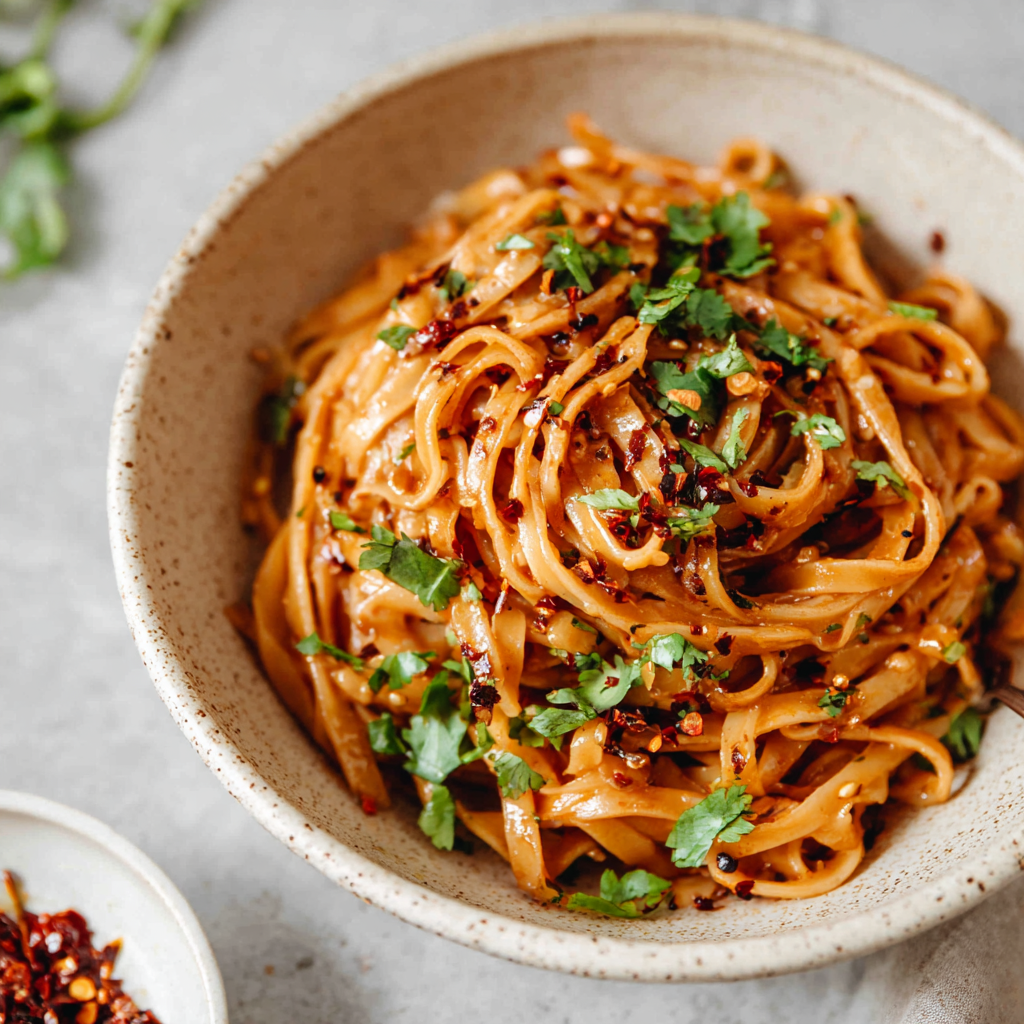
These Thai Red Curry Noodles are a vibrant, aromatic bowl of comfort that hits all the right notes — creamy coconut milk, fragrant garlic and ginger, bold red curry paste, and wide ribbons of noodles that soak up all that flavour. With each bite you’ll taste the warmth of the curry, the richness of coconut, the subtle heat of chili, and the satisfying chew of the noodles. Best of all? You can have this seriously delicious dish on the table in about 15 minutes, making it perfect for a weeknight dinner or a quick but impressive meal. Whether you serve it as is for a plant‑based option or add shredded chicken or shrimp for a heartier version, it’s flexible, flavourful, and totally crave‑worthy.
Why You’ll Love This Recipe
- Super fast to make: Ready in about 15 minutes using everyday ingredients and minimal steps.
- Rich, comforting flavour: Creamy coconut meets bold red curry paste for a satisfying sauce.
- Vegan & gluten‑free friendly: Easily tailored to many diets when you use rice noodles and plant‑based components.
- Endless customisation: Add tofu, chicken, prawn, or extra veggies — this recipe works with whatever you have.
- One‑pot ease (almost): Minimal cleanup and fuss, giving you more time to enjoy your meal.
- Perfect for weeknights: When you want something exciting but don’t have hours to spend in the kitchen.
Ingredients
- 8 oz (≈225 g) rice noodles (or noodles of your choice)
- 1 tablespoon coconut oil or neutral oil
- 4 cloves garlic, minced
- 1‑inch piece fresh ginger, grated
- 2–3 tablespoons red curry paste (adjust to your heat preference)
- 1 can (13.5 oz/≈400 ml) full‑fat coconut milk
- 1 cup vegetable broth (or water)
- 1 tablespoon soy sauce or tamari (for gluten‑free)
- 1 tablespoon lime juice
- 1 tablespoon maple syrup or brown sugar (optional, for mild sweetness)
- 1 red bell pepper, thinly sliced
- 1 cup broccoli florets (or mixed veggies of your choice)
- Optional proteins: cubed tofu, shredded chicken, or shrimp
- Garnish: fresh cilantro, chopped scallions, crushed peanuts or red‑pepper flakes
Instructions
- Cook the noodles: Bring a pot of salted water to boil and cook the rice noodles according to the package instructions. Drain and set aside.
- Sauté aromatics: Meanwhile, heat the coconut oil in a large skillet or wok over medium heat. Add the garlic and ginger and sauté for about 1 minute until fragrant.
- Add curry paste: Stir in the red curry paste and cook for another 30 seconds to release its aroma.
- Pour in liquids: Add the coconut milk and vegetable broth (or water). Stir until the curry paste is fully dissolved and the sauce is smooth.
- Season the sauce: Add soy sauce, lime juice and maple syrup (if using). Taste and adjust heat or sweetness to your liking.
- Add vegetables (and protein): Add the bell pepper, broccoli florets and any optional protein. Simmer for 2–3 minutes until vegetables are tender‑crisp and protein is warmed through.
- Combine with noodles: Add the cooked noodles to the skillet and toss thoroughly so they become coated in the curry sauce. Cook for another minute to let flavours meld.
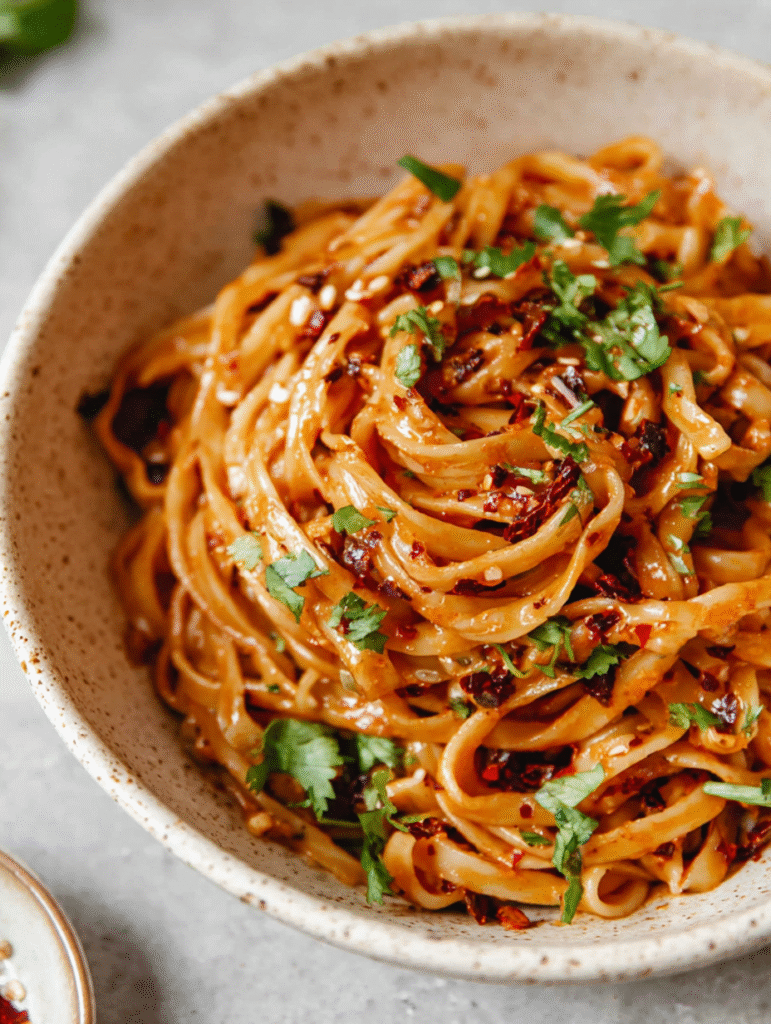
- Garnish & serve: Divide into bowls, garnish with fresh cilantro, scallions, crushed peanuts or red‑pepper flakes. Serve immediately while hot and creamy.
You Must Know
- Use full‑fat coconut milk to get that luscious, rich texture; light versions may thin out the sauce too much.
- Adjust the curry paste according to your spice tolerance — start lower if you’re sensitive to heat.
- Noodles should be just cooked and drained before combining, to avoid over‑cooking in the sauce.
- For best texture, add veggies later in the process so they retain some crispness instead of becoming mushy.
- Serve immediately — the sauce is most vibrant and the noodles have the best texture right after mixing.
Storage Tips
Store any leftover curry and noodles in an airtight container in the refrigerator for up to 3 days. When reheating, stir gently over medium heat and add a splash of vegetable broth or coconut milk if the sauce has thickened. Because of the noodles and coconut milk, freezing is not recommended as the texture may suffer when thawed.
Ingredient Substitutions
- Breadth of noodles: Use udon, soba or even spaghetti if rice noodles are unavailable (adjust cook time accordingly).
- Protein swap: Use tofu, tempeh, shredded rotisserie chicken or cooked shrimp for added protein.
- Dairy‑free already: Recipe is naturally dairy‑free; ensure your curry paste is vegan if required.
- Lower fat: Use light coconut milk and reduce oil slightly—texture will be lighter but still flavourful.
- More veggies: Swap or add zucchini, spinach, snap peas or mushrooms to deepen nutrition and variety.
- Less spicy version: Use 1 tablespoon curry paste and skip red‑pepper flakes when serving; or opt for a mild red curry paste.
Serving Suggestions
Serve this dish with a wedge of lime for extra freshness and a side of steamed jasmine rice or brown rice if you prefer more bulk. Accompany with a simple cucumber‑mint salad or fresh mango slices to contrast the heat. For a beverage, a chilled crisp white wine or ginger‑lime sparkling water pairs beautifully.
Pro Tips
- Pre‑prepare all ingredients (mise en place) before you heat the pan — the cooking itself goes fast.
- Use a wide skillet or wok so the sauce spreads evenly and the noodles can be tossed effectively.
- Tilt the skillet while tossing noodles to ensure they all coat in sauce and avoid clumping.
- If you like “saucy” bowls, leave a bit more liquid in the pan before tossing — the noodles will absorb some as they sit.
- Garnish just before serving so herbs stay fresh and peanuts retain crunch.
Frequently Asked Questions
→ Can I make this ahead of time?
Yes — you can cook the sauce and vegetables ahead and refrigerate. When ready to serve, reheat gently and stir in freshly cooked noodles for best texture.
→ Is this suitable for gluten‑free diets?
Absolutely — just use rice noodles and tamari or gluten‑free soy sauce, and ensure the curry paste has no gluten‑containing additives.
→ Can I reduce the heat?
Yes — simply reduce the red curry paste amount (to 1 Tbsp) and skip adding chili flakes when garnishing.
→ Can I add more carbs like rice?
Yes — serve over steamed rice or mix half rice / half noodles for a different texture and heartiness.
→ What brands of red curry paste should I use?
Choose a quality Thai red curry paste (check for vegan/vegetarian if required) — the flavour base matters.
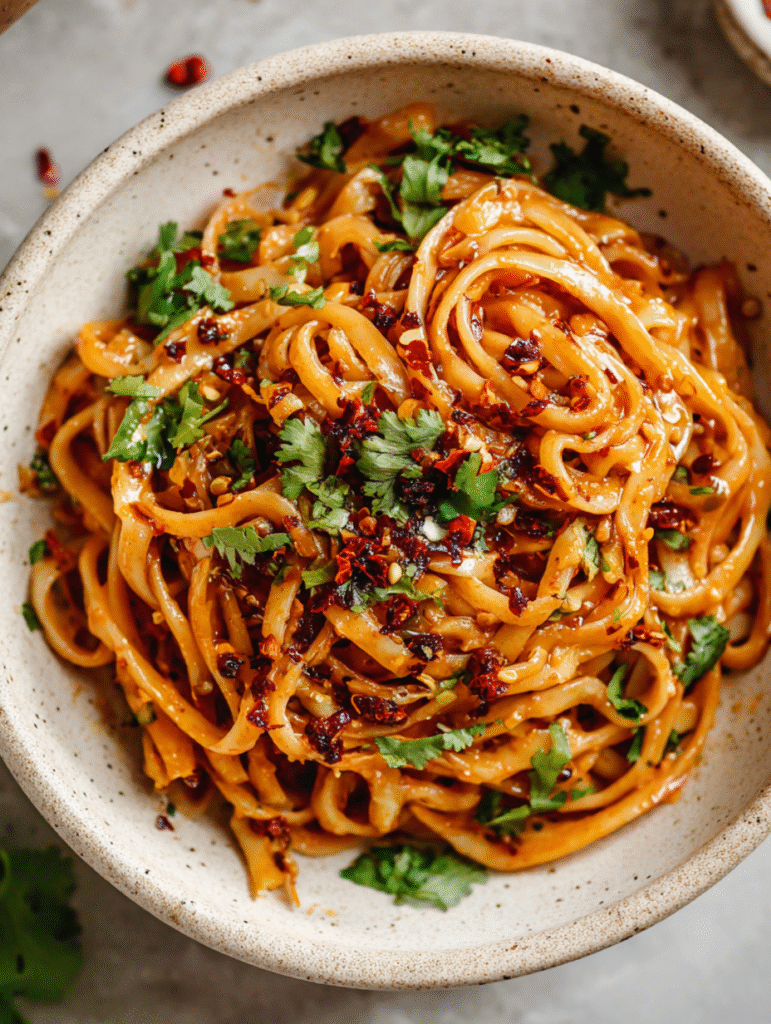
Warm, creamy, spicy and perfectly comforting — these Thai Red Curry Noodles bring big flavour in a simple, satisfying bowl you’ll want to revisit again and again.