Introduction
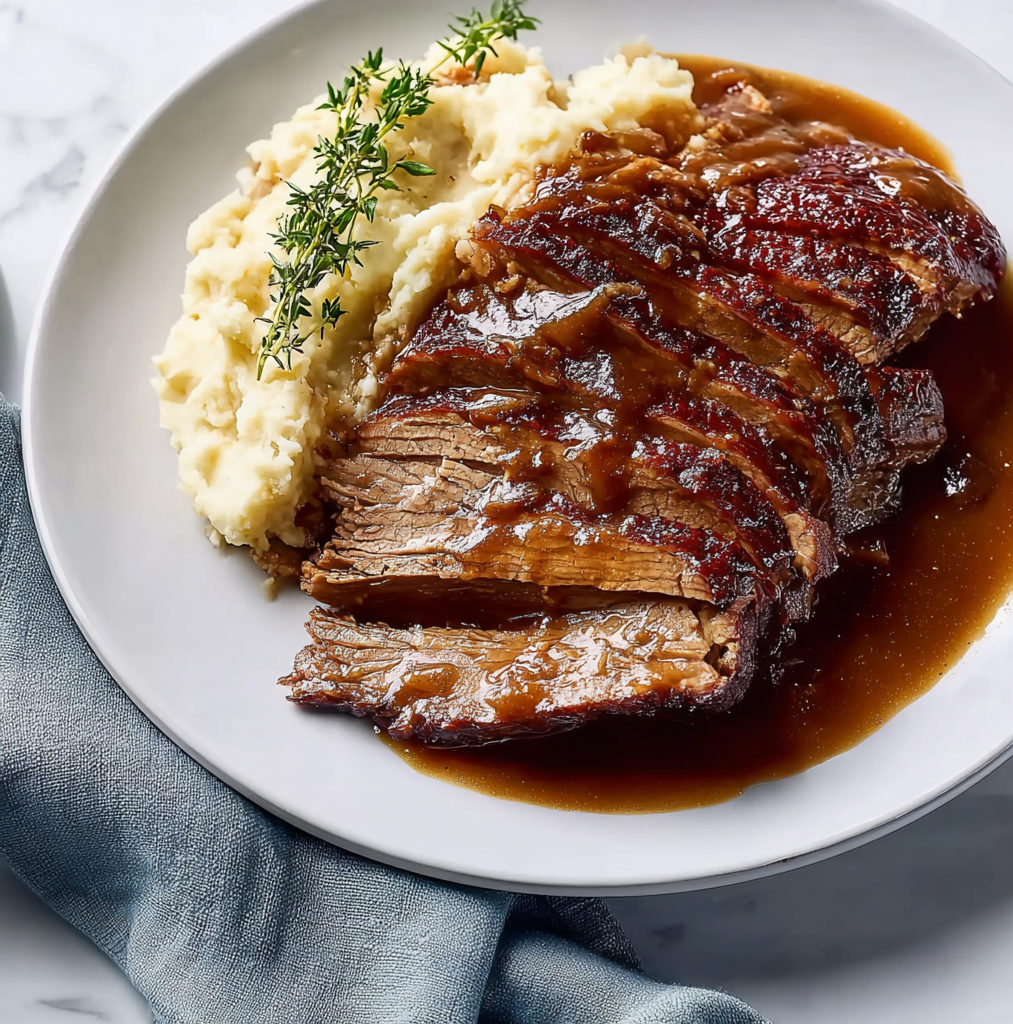
There’s something deeply soulful about Sauerbraten — Germany’s classic “sour roast” that soaks in a tangy, aromatic marinade for days, then slow-cooks into melt-in-your-mouth perfection. Imagine opening your fridge and catching whiffs of red wine, vinegar, and spices mingled with onions, carrots, and juniper berries… that’s the promise of what’s to come. It’s a dish that takes time and patience, but rewards you with a rich, complex flavor that feels both homey and festive.
Sauerbraten is more than just a roast; it’s a ritual. The meat must marinate for several days so the acids and spices have time to break down tough fibers, transforming a humble cut into something luxurious. When the day finally comes to cook it, you sear the meat to lock in those deep flavors, then braise it gently with reserved marinade, vegetables, and sweet notes to build a velvety gravy.
Serving Sauerbraten is a celebration of contrast — that tangy, slightly sweet sauce plays beautifully with traditional sides like spätzle, red cabbage, or potato dumplings. Every bite is a warm, comforting balance of sour and sweet, and the leftovers taste even better the next day. This truly is a roast worth planning ahead for.
Why You’ll Love This Recipe
- Deeply flavored, tender meat — thanks to multi-day marinating
- Rich, tangy-sweet gravy with a soul-soothing balance
- Comforting, slow-cooked texture — perfect for cozy family meals
- Classic German tradition — delivers a taste of heritage
- Versatile sides — pairs beautifully with everything from dumplings to cabbage
- Make-ahead simplicity — the slow marination means less to do on a busy cooking day
Ingredients
(Serves about 6–8 people)
For the Marinade
- 2 cups red wine vinegar
- 1 to 1½ cups dry red wine
- 2 cups water
- 2 large onions, thickly sliced
- 2 carrots, roughly chopped
- 2 celery stalks (or about one small celery root), chopped
- 6–10 whole black peppercorns
- 4–6 whole cloves
- 2 bay leaves
- 8–10 juniper berries (crushed slightly)
- 1–2 teaspoons salt
- 2 teaspoons sugar (or honey, to balance acidity)
For the Roast & Cooking
- 3–4 lb (1.3–1.8 kg) beef roast, such as rump, bottom round, or chuck
- 2 tablespoons vegetable oil (or neutral oil)
- 1 cup beef broth
- ½ cup raisins (optional — adds traditional sweetness)
- ½ cup crushed gingersnap cookies (or gingerbread) for thickening the gravy
- All-purpose flour (for thickening, optional)
- Salt and pepper, to taste
- Butter (optional, a knob to enrich the sauce)
Instructions
- Prepare the marinade:
- In a non-reactive pot (glass, ceramic, or enameled), combine vinegar, red wine, water, sliced onions, carrots, celery, peppercorns, cloves, bay leaves, juniper berries, salt, and sugar.
- Bring to a gentle boil, then simmer for about 5–10 minutes to help the flavors meld. Remove from heat and let the mixture cool completely.
- Marinate the meat:
- Once the marinade is fully cooled, place your beef roast in a large container or a sealable non-metallic bag, then pour the marinade over it, ensuring the meat is fully submerged.
- Refrigerate for 3 to 5 days, turning the roast daily so it marinates evenly and soaks up all the flavor.
- Remove and dry:
- After marination, remove the meat and pat it thoroughly dry with paper towels. This helps with browning.
- Strain the marinade, reserving both the liquid and vegetables separately.
- Sear the roast:
- In a heavy pot or Dutch oven, heat oil over medium-high heat.
- Brown the beef on all sides until a rich crust forms; this builds flavor. Then remove the roast and set it aside.
- Sauté the vegetables:
- In the same pot, add the reserved onions, carrots, and celery from the marinade. Cook them down a little, stirring until the vegetables are softened and lightly caramelized.
- Deglaze and braise:
- Pour in the strained marinade liquid plus beef broth, scraping up any browned bits from the bottom of the pot.
- Return the roast to the pot. Add the raisins (if using) and gently simmer, covered, over low heat for 2½ to 3 hours, or until the meat is fork-tender.
- Make the gravy:
- Carefully remove the roast and keep it warm. Strain the braising liquid to remove vegetables and spices.
- Return the liquid to the pot, bring it to a gentle boil, and stir in the crushed gingersnap cookies (or gingerbread). They should melt and thicken the sauce naturally.
- If a thicker gravy is desired, whisk in a little flour mixed with cold water (a slurry) until the consistency feels right. You can also whisk in a little butter at the end for richness.
- Rest and serve:
- Let the roast rest for about 10 minutes before slicing.
- Slice against the grain into thick or thin slices. Spoon the gravy generously over each portion and serve with traditional sides like red cabbage, spätzle, or potato dumplings.
You Must Know (Helpful Tips)
- Use a non-reactive container for marinating (glass or ceramic) — the vinegar can react with metals.
- Turn the meat daily during marination to ensure even flavor.
- Brown the roast thoroughly — this step significantly deepens the flavor of both the meat and the gravy.
- Cool the marinade before adding to the meat — hot liquid can partially cook the meat and ruin texture.
- Crushed gingersnaps are the traditional way to thicken the sauce and add a subtle, sweet-spicy note. Don’t skip them if you can help it.
- Adjust acid balance at the end — if the sauce is too sharp, simmer longer or add a pinch more sugar or raisins.
Storage Tips
- Refrigerator: Keep leftovers in an airtight container for up to 3–4 days.
- Freezer: Slice the roast, then freeze portions with gravy for up to 2 months.
- Reheating: Warm gently in a pot over low heat, stirring and adding a splash of water or broth if the sauce is too thick.
Ingredient Substitutions
- Beef roast: You can use pork, lamb, or even venison — Sauerbraten is flexible.
- Wine vinegar: If you don’t have red wine vinegar, use apple cider vinegar or a mix of vinegar and a splash of wine.
- Gingersnaps: If not available, gingerbread or gingerbread crumbs work well; for a very different twist, even a bit of brown sugar + flour can thicken, but you lose that signature snap flavor.
- Raisins: Omit or replace with dried cranberries or prunes for a variation on sweetness.
Serving Suggestions
- Serve with red cabbage for a classic German pairing.
- Potato dumplings, spätzle, or mashed potatoes are perfect to catch the tangy gravy.
- A side of braised carrots or sweet-and-sour cabbage complements the richness.
- For drinks: a dark German beer, a bold red wine, or even a slightly sweet Riesling works beautifully.
Pro Tips
- Make this in advance: Sauerbraten tastes even better a day or two later when the flavors have had time to meld.
- Double the sauce: It’s easy to make extra gravy — and you’ll probably want more for leftovers.
- Use high-quality gingersnaps: The flavor of the cookies really shines through in the final sauce.
- Skim fat: After braising, let the sauce cool slightly and skim off fat before thickening for a cleaner, less greasy finish.
- Personalize the sweetness: Depending on your taste, you can increase or reduce sugar or dried fruit in the gravy.
Frequently Asked Questions (FAQ)
Q: How long should I marinate the beef?
A: Ideally 3 to 5 days. This long soak lets the acid and spices penetrate deeply, tenderizing the meat.
Q: What cut of meat is best for Sauerbraten?
A: A tougher cut like rump roast, bottom round, or chuck works best—it holds up during the long marination and slow cooking.
Q: Can I skip the gingersnaps in the gravy?
A: You can, but the gingersnaps are traditional. They add not only thickness but also a sweet, spicy note that balances the sourness.
Q: Is it possible to make a quicker version?
A: Yes, but it won’t be as deeply flavored. Some quicker recipes skip the long marination, but that changes the signature tangy complexity.
Q: Can I use a slow cooker for this?
A: Definitely. After browning the meat, transfer it into a slow cooker with the strained marinade, raisins, and some broth. Cook on low for 6–8 hours or until tender. Then strain and thicken the sauce as usual.
Q: How do I know when the roast is done?
A: The meat should be very tender when pierced with a fork and pull apart easily. Internal temperature isn’t as important here because it’s all about texture after long braising.
Closing Sentence
This Traditional German Sauerbraten is a masterpiece of patience and flavor — its tangy marinade, tender meat, and sweet-spiced gravy bring warmth, heritage, and pure comfort to your dinner table.