Introduction
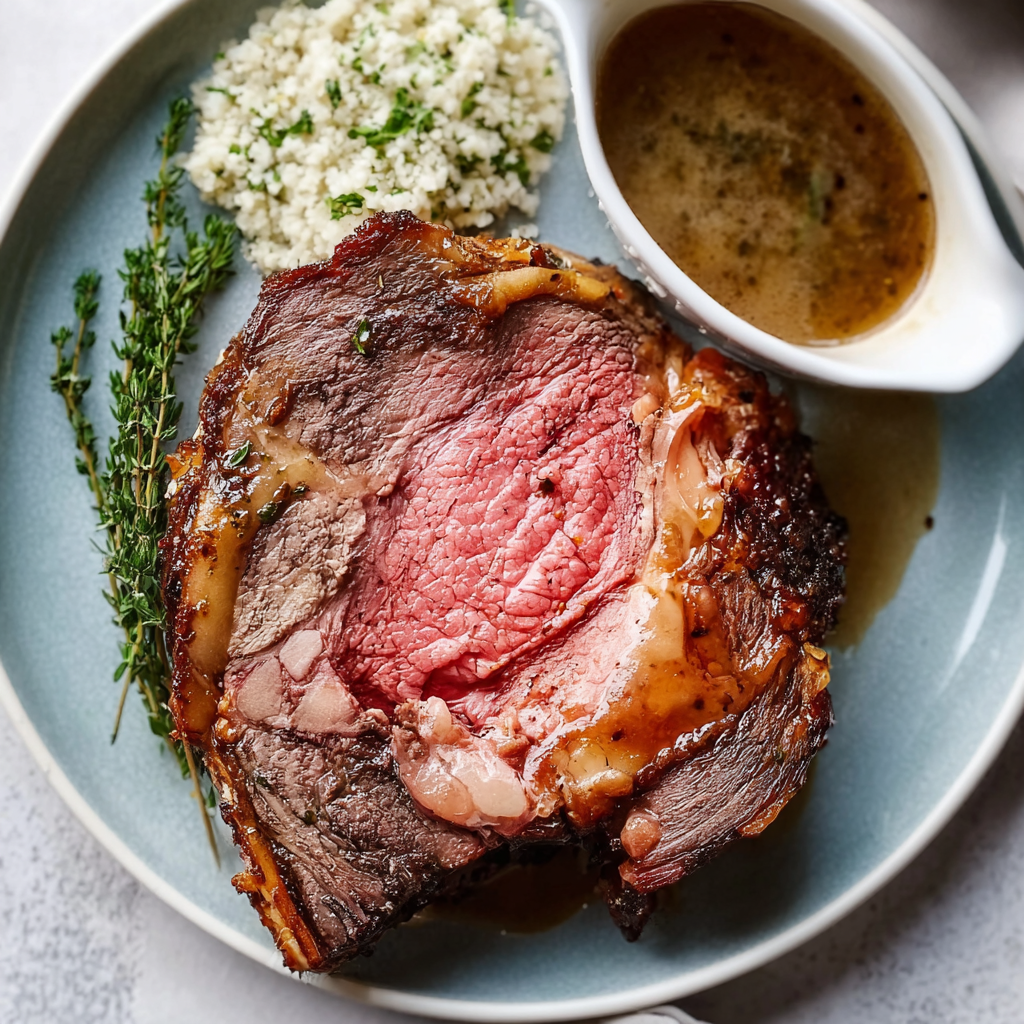
There’s something deeply celebratory about a prime rib roast — it’s rich, luxurious, and impressive in the best possible way. This cut, with its generous marbling and succulent texture, makes every dinner feel like a special occasion. When you roast it slowly and attach a fragrant garlic‑herb butter, the result is a melt-in-your-mouth centerpiece that sings with flavor and wow‑factor.
Imagine rubbing softened butter infused with garlic, rosemary, thyme, and parsley all over the beef, letting it sit, and then roasting it slowly so the exterior forms a beautiful crust while the inside stays tender and juicy. When it’s done, slicing through that rosy interior and tasting the depth of flavor is one of life’s culinary joys — every cut feels indulgent, every bite melts.
From holiday feasts to elegant weekend dinners, this recipe elevates prime rib to something truly unforgettable. Serve it with simple sides that let the meat shine, and gather around as family or friends dig in. The aroma alone — warm garlic, fresh herbs, and rich beef — makes the whole kitchen feel like home.
Why You’ll Love This Recipe
- Rich, juicy meat — prime rib is known for its exceptional tenderness and marbling
- Garlic‑herb butter — infuses every bite with aromatic, savory flavor
- Perfect crust — roasted to a deep, flavorful sear on the outside
- Versatile doneness — you can aim for rare, medium‑rare, or more, based on preference
- Impressive but not difficult — simple prep, but feels gourmet
- Great for leftovers — slices reheat beautifully for sandwiches or next-meal suppers
Ingredients
- 4–6 kg (9–13 lb) prime rib roast, bone‑in (or boneless, if you prefer)
- 1 cup (225 g) unsalted butter, softened
- 4 cloves garlic, finely minced
- 2 tablespoons fresh rosemary, finely chopped
- 2 tablespoons fresh thyme leaves, chopped
- 3 tablespoons fresh parsley, chopped
- 2 teaspoons kosher salt
- 1 teaspoon freshly ground black pepper
- Optional: 1 teaspoon lemon zest, for brightness
Instructions
- Bring the roast to room temperature
- Remove the prime rib from the fridge about 2 hours before cooking. This step helps it cook more evenly.
- Pat the roast dry with paper towels.
- Prepare the garlic‑herb butter
- In a small bowl, combine the softened butter, garlic, rosemary, thyme, parsley, salt, pepper, and lemon zest (if using).
- Mix well until smooth and all the aromatics are evenly distributed.
- Butter the roast
- Rub the garlic-herb butter all over the surface of the roast, making sure to get into crevices and around the fat cap.
- If your roast is tied or has bones, make sure to spread butter on all sides.
- Preheat your oven & roast
- Preheat the oven to 500°F (260°C) for initial searing.
- Place the roast on a rack in a roasting pan, fat-side up, so air can circulate.
- Put the roast in the oven for 15 minutes to develop a crust.
- Lower the heat & continue roasting
- After 15 minutes, reduce the oven temperature to 325°F (163°C).
- Continue roasting, using the “minutes per pound” guideline to estimate time: for medium-rare, plan around 15–19 minutes per pound at this temperature.
- Insert a meat thermometer into the thickest part of the roast (without touching bone) to monitor doneness accurately.
- Check internal temperature
- For rare, pull at around 120–125°F (49–52°C); for medium-rare, aim around 130–135°F (54–57°C).
- Cooking by temperature (not just time) ensures you hit your preferred doneness.
- Rest the roast
- Once the target temperature is reached, remove the roast from the oven. Tent it loosely with foil.
- Let it rest for 30 minutes or more — this lets the juices redistribute so each slice is juicy and tender.
- Carve and serve
- Using a sharp carving knife, slice the roast across the grain.
- Serve with the rich pan juices, or make a simple au jus from the drippings if you like.
You Must Know (Helpful Tips)
- Use a reliable thermometer: The most foolproof way to ensure perfect doneness is by monitoring the internal temperature rather than relying solely on time.
- Don’t skip the high-heat start: That blast of heat at the beginning helps form a flavorful crust and locks in juices.
- Let it rest well: Resting is critical. If you carve too soon, the juices will run out and your roast may end up dry.
- Season ahead: If you like, you can apply the butter and salt rub and let the roast sit (uncovered in the fridge) for a few hours before cooking — this helps the flavors deepen.
- Trim carefully: If your roast has a very thick fat cap, trim some off, but leave enough to render and flavor during cooking.
Storage Tips
- In the fridge: Store leftover slices in an airtight container for up to 3–4 days.
- Freezing: Slice and freeze in portions, ideally with a little of the pan juices or drippings to retain moisture. Freeze for up to 2 months.
- Reheating: Reheat gently in a low oven (around 150–160°C / 300–325°F) covered with foil. Add a splash of stock or drippings to preserve juiciness.
Ingredient Substitutions
- Butter: You can use a compound butter (garlic, herbs, maybe a splash of mustard) instead of plain.
- Herbs: If you don’t have all of rosemary, thyme, and parsley, you can use just two, or substitute with dried herbs (reduce the amount accordingly).
- Garlic: Use roasted garlic for a milder, sweeter flavor.
- Beef cut: While this recipe is written for a prime rib, a standing rib roast or well-marbled ribeye roast can be used in a similar way — just adjust time slightly.
Serving Suggestions
- Serve with horseradish cream, au jus, or a classic red wine jus.
- Pair with garlic mashed potatoes, roasted root vegetables, or creamed spinach.
- A simple green salad or steamed asparagus helps balance the richness.
- For drink pairings: a bold red wine (Cabernet Sauvignon or Syrah) or a rich, malty beer works beautifully.
Pro Tips
- Reverse sear option: For even more control, you can roast at a low temperature (e.g., 225–250°F), then finish at high heat for a crust.
- Compound butter roll: Roll your herb butter in plastic wrap into a cylinder, chill, and slice rounds to place under the roast’s fat cap.
- Save the fat: After carving, save the fat and drippings to make a flavorful gravy or use for roasting vegetables.
- Make ahead: You can season and butter the roast the day before — just keep it covered in the fridge until ready to cook.
Frequently Asked Questions (FAQ)
Q: Should I tie my prime rib roast?
A: If it’s not already tied, you can tie it to ensure even cooking and stability. But many roasts come pre-tied.
Q: Can I smoke prime rib instead of roasting it?
A: Yes — you can smoke it at a low temperature until it reaches your desired internal doneness, then optionally sear it over high heat to finish.
Q: What’s the best internal temperature for medium-rare?
A: Aim for 130–135°F (54–57°C) before resting, as the temperature will rise a few degrees while resting.
Q: Does the roast continue cooking after I pull it out?
A: Yes — this is called “carry-over cooking.” That’s why it’s okay to pull it a few degrees before your target, then let it rest.
Q: Can I use a boneless roast instead of bone-in?
A: Absolutely — boneless prime rib works well. The cooking time may be slightly shorter, so rely on your thermometer.
Q: Do I need to baste the roast?
A: Not necessarily. The butter rub helps keep the meat moist, but you can spoon some of the pan juices over the roast once or twice if you like.
Closing Sentence
This Prime Rib Roast with Garlic‑Herb Butter is the kind of hearty, flavorful centerpiece that makes any meal feel like a celebration — rich, elegant, and completely unforgettable.