Introduction
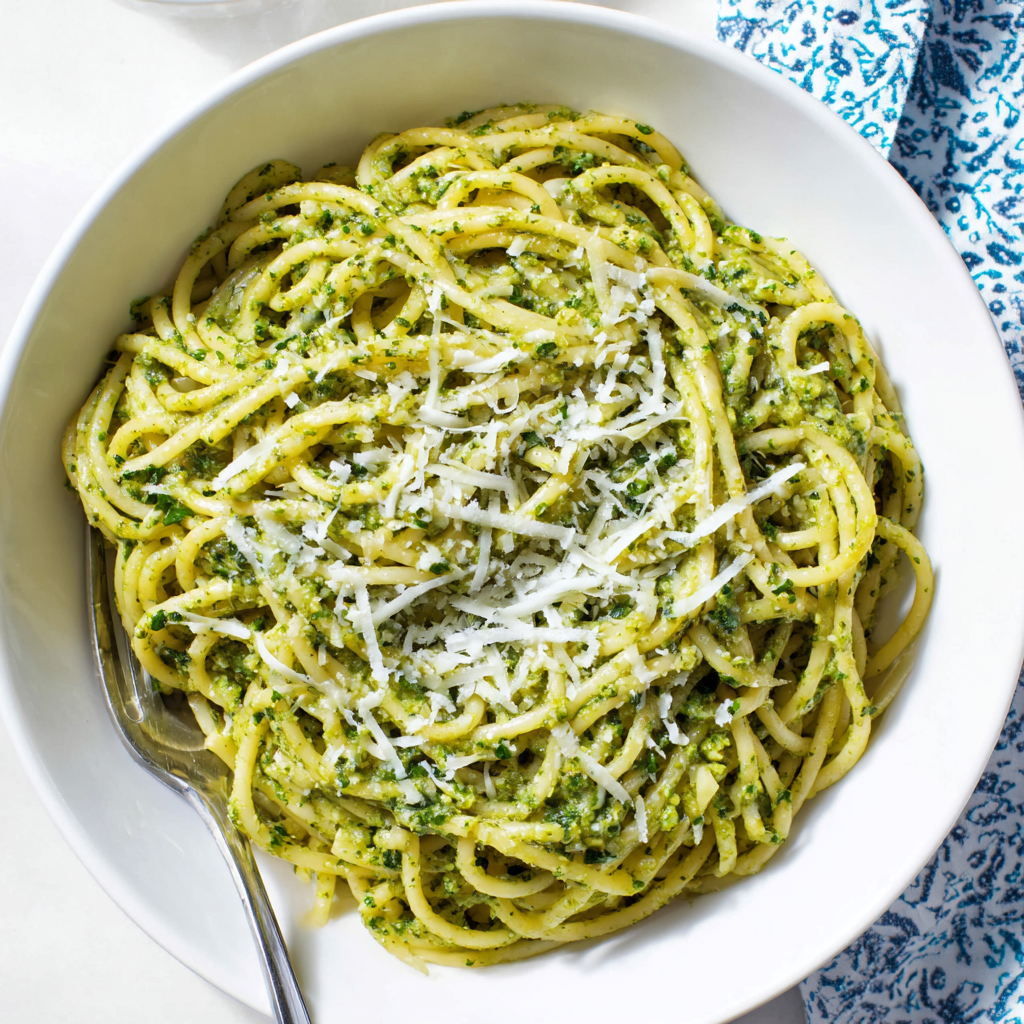
There’s something so beautifully simple and timeless about pesto pasta — a dish that feels like sunshine in a bowl. The vibrant green of fresh basil, the nutty warmth of pine nuts, the richness of Parmesan, and the mellow bite of garlic, all brought together with silky olive oil, creates a comforting and herbaceous experience. When you toss that fragrant pesto with hot pasta and just a splash of pasta water, it clings in the most delicious, glossy way.
I love making this on a weeknight when I’m craving something fast but also deeply flavorful. The aroma of basil as you blend the pesto fills the kitchen in the most soothing way, and mixing it with pasta feels almost meditative. It’s humble, but it’s also elegant — like a warm Italian hug.
This dish is a celebration of classic, fresh ingredients. You don’t need anything fancy to pull it off, just good basil, olive oil, cheese, and a few staples. And even better: you can easily tweak it to make it your own, whether by adding vegetables, switching up the nuts, or using a different pasta shape.
If you’re looking for a bright, aromatic, and satisfying pasta that’s quick to make but feels special, this pesto pasta is a joyful go-to.
Why You’ll Love This Recipe
- Bursting with fresh basil flavor and herbaceous aroma
- Made with simple, high-quality ingredients — no cream, no fuss
- Quick and easy — ready in about 20 minutes
- Creamy and silky texture thanks to pasta water emulsifying the sauce
- Highly customizable — change nuts, herbs, or pasta shape
- Perfect for a light vegetarian dinner, or as a side alongside grilled proteins
Ingredients
- 1 lb (≈ 454 g) spaghetti (or any pasta shape you like)
- 1 teaspoon kosher salt (for the pasta water)
- 3 cloves garlic, peeled
- ½ cup pine nuts (or substitute with walnuts, almonds, etc.)
- 4 cups fresh basil leaves (lightly packed)
- ½ cup freshly grated Parmesan cheese
- ½ cup extra-virgin olive oil
- Salt, to taste (for the pesto)
- Optional garnish: extra Parmesan, basil leaves
Instructions
- Cook the pasta
- Bring a large pot of water to a rapid boil. Add a good pinch of kosher salt.
- Add the pasta and cook until al dente, following package instructions.
- Before draining, reserve 1 cup of the pasta cooking water. Then drain the pasta in a colander.
- Make the pesto
- While the pasta is cooking, combine the garlic and pine nuts in a food processor and pulse until finely chopped.
- Add the basil leaves, Parmesan, olive oil, and a pinch of salt. Process until the mixture becomes a smooth, vibrant green paste. Scrape down the sides as needed.
- Taste and adjust salt to your liking.
- Combine pasta and pesto
- Return the drained pasta to its pot (off the heat).
- Add the pesto, then pour in about ½ cup of the reserved pasta water. Use tongs (or wooden spoons) to gently toss the pasta and sauce together.
- If the sauce seems too thick or doesn’t coat the pasta well, add more of the reserved pasta water little by little until it’s glossy and well-emulsified.
- Serve
- Divide the pasta into bowls. Garnish with extra Parmesan and basil leaves if desired.
- Serve immediately, while the pasta is warm and the flavors are fresh.
You Must Know (Helpful Tips)
- Use the pasta water: The starchy water is key to making the pesto cling beautifully to your noodles and gives it a silky texture.
- Don’t over-process the pesto: Blend just enough to get a smooth consistency — over-blending can make the basil dark and bitter.
- Balance salt: Parmesan adds saltiness, so taste the pesto carefully before adding extra salt.
- Fresh basil matters: Use bright, fragrant basil for the best flavor — wilted basil will yield a duller sauce.
- Serve quickly: Pesto is most vibrant just after it’s made. If it sits too long, the color and flavor mellow.
Storage Tips
- In the fridge: Store leftover pesto (separate from pasta) in an airtight container. Pour a thin layer of olive oil on top to help preserve the green color and refrigerate for up to 5 days.
- Freezing: Pesto freezes wonderfully — portion it into ice cube trays, freeze, then transfer to a freezer bag. Use within 3 months.
- Reheating pasta: Warm gently on the stove over low heat, adding a splash of water to loosen the sauce.
Ingredient Substitutions
- Pine nuts → walnuts, almonds, pistachios, or sunflower seeds (for a nut-free option)
- Parmesan → Pecorino Romano or a plant-based hard cheese
- Olive oil → light olive oil or a mild-flavored oil, though extra-virgin is best for flavor
- Basil → try mixing with other soft herbs like parsley, mint, or arugula for a different twist
- Pasta → use any shape: penne, fusilli, linguine, or even whole-grain or gluten-free pasta
Serving Suggestions
- Pair this pesto pasta with a fresh green salad (e.g., arugula, cherry tomatoes, lemon vinaigrette) for a light, balanced meal.
- Serve alongside grilled chicken, shrimp, or roasted vegetables for added protein.
- Offer crusty bread or garlic toast to scoop up any extra pesto sauce.
- A chilled white wine (like Pinot Grigio or Sauvignon Blanc) complements the herbaceous basil beautifully.
Pro Tips
- Toast the pine nuts lightly in a dry skillet before using them — it deepens the nutty flavor of the pesto.
- If you have a mortar and pestle, you can make the pesto by hand for an even more authentic texture and vibrancy.
- For a brighter color, chill your food processor bowl or pulse in ice cubes briefly while blending (then remove them).
- Whisking in a tiny bit of cold butter at the end can make the sauce even richer and silkier (optional, but delicious).
Frequently Asked Questions (FAQ)
Q: Can I use store-bought pesto instead of making it from scratch?
A: Yes — using a good-quality jarred pesto works in a pinch. Toss it with the hot pasta and add a little pasta water to loosen it and help it coat well.
Q: My pesto tastes bitter — what went wrong?
A: Bitterness can come from over-blending the basil or using mature or bruised leaves. Try pulsing for less time, and make sure your basil is fresh. Also, lightly toasting the nuts (instead of using them raw) can help mellow strong flavors.
Q: Can I make this recipe vegan?
A: Absolutely! Swap out the Parmesan for a plant-based hard cheese or nutritional yeast, and make sure your pesto has high-quality olive oil for richness.
Q: How much pesto does this recipe make?
A: This recipe makes just enough pesto to coat about 1 lb of pasta nicely — if you have extra, it’s great for storing or using in other dishes.
Q: What if I don’t have a food processor?
A: You can use a blender, but you may need to work in smaller batches. Alternatively, use a mortar and pestle to grind garlic, nuts, and basil gradually — it’s traditional and gives a wonderfully rustic texture.
Q: How can I keep the pesto bright green?
A: Blanching the basil very briefly and then shocking it in ice water before blending can help preserve color. Also, store pesto in the fridge with a thin layer of olive oil on top to help prevent oxidation.
I hope you enjoy this Easy Basil Pesto Pasta — it’s one of those recipes that feels effortless but tastes deeply satisfying. Let me know if you want to add vegetables, protein, or any twist!