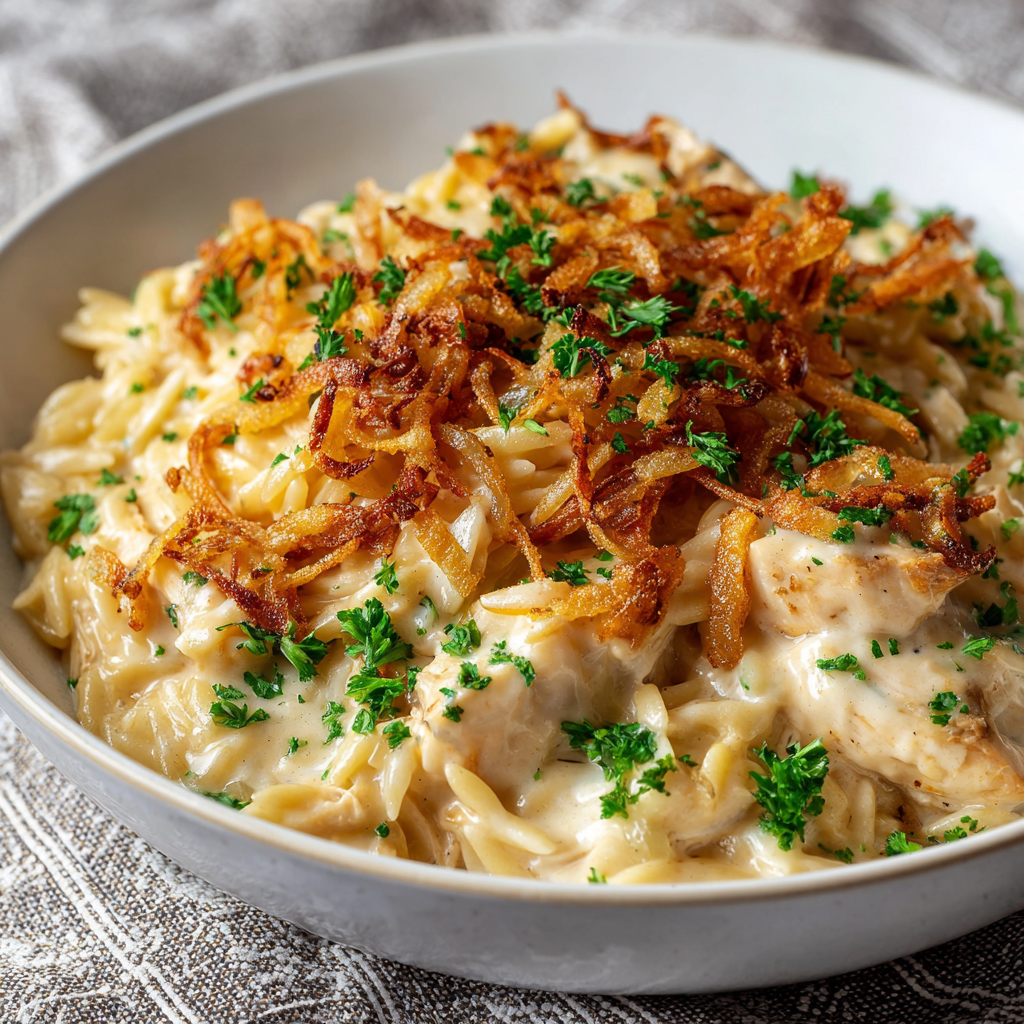
When it comes to comfort food that doesn’t feel too heavy but still delivers on rich, layered flavor, this French Onion Chicken Orzo Casserole ticks all the boxes. Picture deeply caramelized onions swimming in savory broth, tender pieces of chicken simmering alongside rice-shaped pasta (orzo) that soaks up every bit of sauce, topped off with nutty, melted Gruyère cheese that forms a golden crust. It’s elegant enough for guests yet simple and satisfying enough for a busy weeknight.
Whether you’re craving something cozy for dinner or want to impress without spending hours in the kitchen, this dish brings the best of both worlds: depth of flavor, ease of preparation, and make-ahead or freezer-friendly options. The base flavors borrow from classic French onion soup (sweet onions, beef or chicken broth, thyme) and transform them into a hearty, one-dish casserole you’ll want on repeat.
Why You’ll Love This Recipe
- Rich, layered flavor: Those slow-caramelized onions bring sweetness, depth and body. When combined with savory broth and melted cheese, the result is comforting and elegant.
- Creamy, satisfying texture: The orzo absorbs the sauce and supports chunks of chicken, creating a cohesive dish rather than separate components.
- One-dish convenience: Many versions cook everything together in a skillet or oven-safe dish, reducing cleanup and simplifying weeknight meals.
- Make-ahead & freezer friendly: Because it behaves like a casserole, you can assemble in advance, freeze portions, or reheat leftovers with minimal trouble.
- Elevated enough for guests: With the combination of buttered onions, Gruyère cheese, and fresh thyme, the dish has a refined feel—but none of the fuss of a multi-course dinner.
Ingredients
For the Chicken & Orzo Base
- Boneless, skinless chicken thighs or breasts (thighs will stay more tender)
- Yellow onions (large, sweet when possible) — to caramelize slowly for maximum flavor
- Orzo pasta (rice-shaped) — ideal for soaking up sauce and cooking more quickly than larger pastas
- Beef or chicken broth — beef gives deeper onion-soup “feel” but chicken works too
- Heavy cream (optional) or cream/milk mixture — for richness and texture.
- Fresh thyme or other herbs — to lift the richness and add a savory herbal note.
- Gruyère cheese (or Swiss/Swiss-Gruyère blend) — melts beautifully, adds nuttiness.
- Butter + olive oil — for caramelizing onions and sautéing components.
- Garlic, salt, pepper — essential seasoning.
Instructions
Follow these step-by-step for best results.
- Caramelize the Onions
In a large oven-safe skillet or Dutch-oven, melt butter and olive oil over medium-low heat. Add thinly sliced onions and cook slowly, stirring often, until golden and deeply caramelized — about 30-40 minutes. Add garlic and cook for another minute. - Sear the Chicken
While onions are nearing readiness, pat chicken dry, season (salt/pepper/thyme), then in another pan (or same if space) lightly brown the chicken on both sides. Remove and set aside. (Some versions cook chicken after the onions in the same pan.) - Combine Pasta & Broth
Add the uncooked orzo to the skillet with onions (if space allows) or transfer onion mixture plus orzo to a baking dish. Pour in the broth, stir in herbs, and add the chicken back. If using cream, stir it in now. Bring to a simmer. (Some adaptions simmer on stovetop briefly before baking.) - Top with Cheese & Bake
Pre-heat oven (often ~ 350 °F / 175 °C). Sprinkle shredded Gruyère cheese evenly over the top. Transfer to oven and bake until the orzo is tender, the chicken is cooked through (internal temp 165 °F / 75 °C), and the cheese is melted and bubbly/golden. - Rest & Serve
Let the casserole sit 5–10 minutes out of the oven so it sets slightly. Garnish with fresh thyme or parsley if desired. Serve warm, digging in so you get chicken, orzo, cheese & onion in each bite.
You Must Know
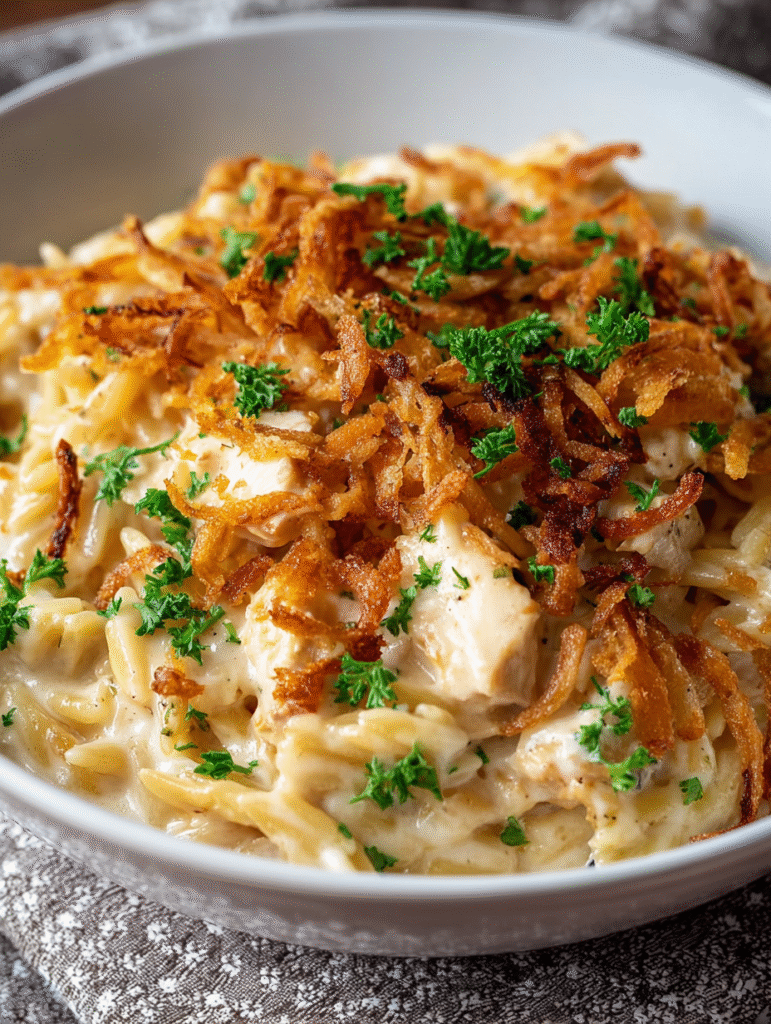
- Onion caramelization is key. Don’t rush it. Those sweet, rich onions are what give this dish its “French onion” identity — flavor will suffer if you skip or undercook this step.
- Use orzo (or similar small pasta) so it cooks evenly and absorbs sauce properly rather than becoming mushy or drying out.
- Chicken cut and thickness matter: Ensure chicken is trimmed and even so it cooks at the same pace as the orzo. Overly thick chicken may remain undercooked or dry when pasta is done.
- Cheese melting and browning: If you like a crisp top, you can broil for last minute or bake uncovered. Keep an eye so it doesn’t burn.
- Cleanup-friendly: Using an oven-safe skillet means fewer dishes. If using separate dishes, you can sauté onions + chicken in skillet then transfer to a baking dish.
- Make-ahead: You can caramelize onions ahead, cook chicken slightly, then assemble and bake when you’re ready. Cooler day preparation helps.
- Freezer friendly: After baking, portion and freeze. Reheat gently in oven to retain texture rather than microwave only.
Storage & Make-Ahead Tips
- Store leftovers in an airtight container in the fridge for up to 3-4 days.
- To freeze: Portion into freezer-safe containers. Freeze up to 2-3 months. Thaw in fridge overnight, then reheat in oven at ~300-325 °F until warm throughout.
- If reheating, you may need a splash of broth or cream to refresh texture.
- If making ahead: Caramelize onions ahead of time (store cooled in fridge up to a day), sear chicken ahead, then assemble the casserole and refrigerate until bake time.
Ingredient Substitutions & Variations
- Chicken cut: Use thighs (more flavor, more forgiving) or breasts (leaner).
- Cheese: If you don’t have Gruyère, Swiss or mozzarella can work—but you’ll lose some of the nutty complexity.
- Broth: Beef broth gives deeper flavor; chicken broth or vegetable broth work for lighter versions.
- Pasta option: If you don’t have orzo, other small-shape pasta like ditalini or mini shells can work—adjust cooking time accordingly.
- Herbs & aromatics: Use fresh thyme or rosemary; a splash of white wine or Worcestershire sauce adds extra depth.
- Dietary tweaks: Use gluten-free orzo or pasta; substitute heavy cream with coconut cream for dairy-free (though flavor will shift).
Serving Suggestions
- Pair with a crisp green salad (e.g., arugula with lemon vinaigrette) to cut through the richness.
- Serve with garlic-roasted broccoli or green beans for veggie balance.
- A light French bread or crusty baguette for soaking up any sauce leftovers.
- For guests: Serve in the casserole dish, garnish with fresh thyme sprigs and a little extra shredded cheese on top.
- Wine pairing: A light red like Pinot Noir, or a crisp white like Chardonnay works nicely with the creamy, onion-rich profile.
- For a seasonal twist: Add sautéed mushrooms or a handful of baby spinach in the last 5 minutes of cooking for extra flavor & texture.
Pro Tips
- Use a good quality non-stick or heavy oven-safe skillet (or Dutch oven) with a tight-fitting lid if simmering on stove.
- When caramelizing onions: keep heat medium-low, stir often, and use a little water or broth to deglaze if onions start sticking.
- Portion chicken so each person gets generous size (e.g., ~150-200 g). Cut into 1-inch pieces so they cook evenly.
- When baking, if cheese is not browning enough, switch to broil for last 1-2 minutes—but watch carefully.
- Use a digital thermometer to check chicken reaches safe internal temp (165 °F / 75 °C) without overcooking.
- Before serving, let the casserole rest 5 minutes so sauce thickens and flavors settle; this also makes scooping easier.
Frequently Asked Questions
→ Can I use chicken breasts instead of thighs?
Yes, you can. Chicken breasts are leaner but may dry out more easily. Ensure they are trimmed, of even thickness, and don’t overcook.
→ Can I make this vegetarian?
Yes — substitute the chicken with hearty mushrooms (cremini or portobello), vegetable broth instead of beef/chicken, and perhaps add extra cheese for richness.
→ Can I make this ahead and freeze?
Absolutely. Assemble the casserole (up to baking, or even bake and then freeze) and reheat when needed. For best texture, thaw and reheat in oven rather than just microwave.
→ My onions aren’t caramelizing properly — what went wrong?
If the heat’s too high, onions may burn rather than caramelize. Also if pan is overcrowded, they steam instead of browning. Use moderate heat, stir often, and give them time (~30-40 minutes) to really develop color.
→ The casserole turned out too watery / thin — what can I do?
Possibilities: too much liquid, or the orzo absorbed less than expected. Ensure you’re using correct broth amount, and after baking let the dish rest to thicken. If needed, cook a few additional minutes uncovered or remove some liquid before serving.
→ Can I skip the Gruyère cheese or use another cheese?
You can skip or substitute but keep in mind you’ll change the flavor profile. Gruyère has a nutty, rich character; swapping with mozzarella gives a milder result.
This French Onion Chicken Orzo Casserole is more than a dinner—it’s a cozy celebration of flavor and comfort, executed in a smart, one-dish format. It balances elegance and ease, making it perfect whether you’re hosting or just resting into a well-deserved meal at home.