Introduction
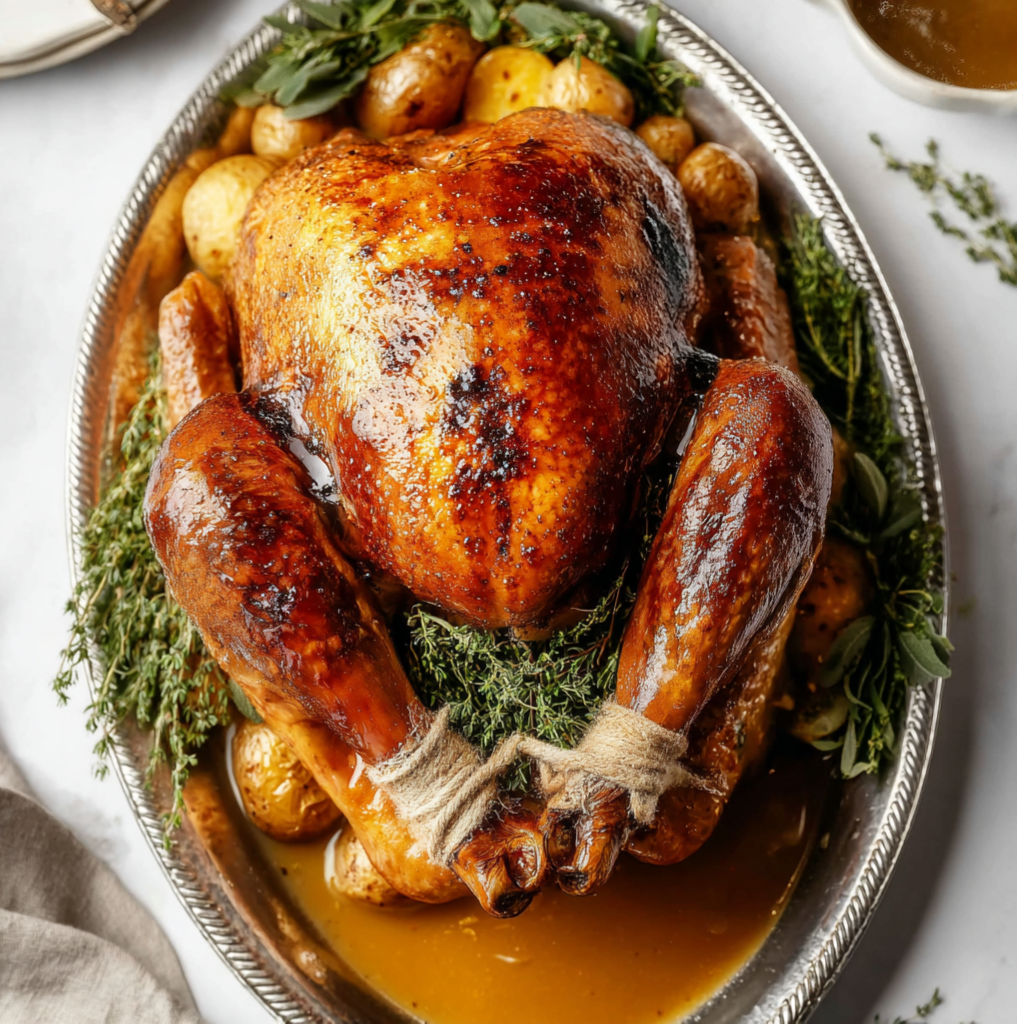
Nothing says celebration quite like a beautifully roasted turkey that comes out of the oven golden, aromatic, and so juicy it practically melts. This Juicy Roast Turkey with a Butter-Herb Rub is all about infusing the bird with fragrant, herbaceous richness while keeping every bite tender and succulent. Imagine rubbing the turkey under its skin with soft, garlicky butter and herbs — that slow roast unlocks deep, savory flavors that fill your kitchen with warmth and delight.
Whether it’s a holiday feast, a family gathering, or simply a Sunday dinner that deserves something special, this turkey delivers. The butter-herb rub seeps into the meat, while a gentle oven roast gives you crisp skin outside and moist, flavorful meat inside. The aroma of thyme, rosemary, and parsley mingles with garlic and citrus notes, inviting everyone to gather around.
When you carve into it, the juices run clear, and each slice carries that delicate balance of seasoning and natural turkey flavor. Serve it with your favorite sides — from mashed potatoes to roasted vegetables — and you’ve got a centerpiece that’s both elegant and heartwarming.
Why You’ll Love This Recipe
- Perfectly moist and juicy meat — thanks to butter rubbed under the skin
- Rich, savory-herb flavor — garlic, parsley, thyme, and rosemary infused deeply
- Crispy, golden skin — lightly seasoned and beautifully roasted
- Easy to prepare — simple herb butter and basic roasting
- Great make-ahead option — butter rub can be mixed the day before
- Versatile for any occasion — fitting for holiday dinners or special family meals
Ingredients
(For a 4–6 kg (9–13 lb) whole turkey)
- 1 whole turkey, about 4–6 kg, thawed if frozen
- 1 cup (225 g) unsalted butter, softened to room temperature
- 4 cloves garlic, minced
- 2 tablespoons fresh parsley, finely chopped
- 1 tablespoon fresh thyme (or 1 teaspoon dried)
- 1 tablespoon fresh rosemary, finely chopped (or 1 tsp dried)
- 1 teaspoon fresh sage, chopped (optional)
- Zest of 1 lemon
- Salt and freshly ground black pepper, to taste
- 1 onion, quartered
- 1 lemon, quartered
- 2–3 sprigs fresh thyme and rosemary (for the cavity)
- 2 cups (about 500 ml) low-sodium chicken or turkey stock, for the roasting pan
Instructions
- Prep the turkey:
- Remove the turkey from the refrigerator about 1 hour before roasting so it can come closer to room temperature. This helps it cook more evenly.
- Remove the neck and giblets from the cavity (if included), and pat the turkey completely dry (skin and cavity) with paper towels.
- Make the herb butter rub:
- In a medium bowl, combine the softened butter, minced garlic, parsley, thyme, rosemary, sage (if using), and lemon zest.
- Season the mixture generously with salt and pepper, mixing until everything is evenly incorporated.
- Butter under the skin:
- Gently loosen the turkey skin over the breasts by sliding your fingers between the meat and the skin, being careful not to tear it.
- Spread about half of the butter-herb mixture under the skin, over the breast meat, smoothing it out so it’s as even as possible.
- Rub the remaining herb butter all over the outside of the turkey, seasoning the skin evenly.
- Season the cavity:
- Place the quartered onion, quartered lemon, and fresh herb sprigs inside the turkey cavity. This aromatics bouquet flavors from the inside out.
- Set up for roasting:
- Preheat your oven to 325°F (165°C) (or according to your oven’s recommendation for turkey).
- Place the turkey breast-side up on a roasting rack inside a roasting pan.
- Pour the stock into the bottom of the roasting pan to keep the environment moist and help catch drippings.
- Roast the turkey:
- Tent the turkey loosely with aluminum foil (or a lid) for the first part of roasting to prevent excessive browning.
- Roast for approximately 13–15 minutes per pound (roughly 30–35 minutes per kg), basting occasionally with the pan juices.
- About 30–45 minutes before the estimated end of cooking, remove the foil so the skin can crisp up and brown nicely.
- Check for doneness:
- Use an instant-read thermometer to check the turkey’s internal temperature: it should read 165°F (74°C) in the thickest part of the thigh (avoiding the bone).
- Once it reaches that temperature, remove the turkey from the oven.
- Rest the turkey:
- Transfer the turkey to a cutting board and tent it loosely with foil. Let it rest for at least 20–30 minutes before carving. This resting period allows the juices to redistribute and makes carving easier.
- Carve and serve:
- Carve the turkey into slices (breast, thighs, wings) and arrange on a serving platter.
- Spoon some of the pan drippings or juices over the slices to keep them moist and flavorful.
You Must Know (Helpful Tips)
- Bring to room temperature: Letting the turkey sit out before roasting ensures more even cooking.
- Butter under the skin is key: This delivers moisture directly where it’s needed and helps the meat stay tender.
- Don’t skip the seasoning: Rub the skin well — it becomes deliciously crispy and flavorful.
- Baste occasionally: Use a spoon or baster every 30 minutes or so with pan juices to keep the breast moist.
- Let it rest well: Cutting too soon will release the juices; resting helps them settle.
Storage Tips
- Refrigerator: Store leftover turkey in an airtight container for up to 3–4 days.
- Freezing: Slice the meat and freeze in portions with a little of the pan juices or stock to retain moisture; freeze for up to 2 months.
- Reheating: Warm gently in a low oven (around 150–160°C / 300–325°F) covered with foil, adding a splash of stock or drippings so the turkey doesn’t dry out.
Ingredient Substitutions
- Butter: You can use compound butter (already herbed) or half butter, half olive oil for a lighter option.
- Fresh herbs: Substitute dried herbs — reduce amounts (e.g., 1 teaspoon dried instead of 1 tablespoon fresh).
- Lemon: If you don’t have fresh lemon, omit the zest or use a little lemon juice in the butter mix.
- Stock: Use vegetable stock or water if you don’t have turkey or chicken stock; just season your basting juices well.
Serving Suggestions
- Serve alongside mashed potatoes, roasted root vegetables, or green bean casserole.
- A crisp salad or citrus-y slaw adds freshness to the meal.
- Use the pan drippings to make a rich gravy — simply whisk in a bit of flour or cornstarch to thicken.
- Pair with a buttery Chardonnay, a light Pinot Noir, or a sparkling cider for a festive touch.
Pro Tips
- Use a thermometer: It’s the most reliable way to ensure your turkey is perfectly cooked and safe.
- Foil trick: Tent with foil early, then uncover halfway through roasting so the skin crisps without burning.
- Save the drippings: They’re pure gold for making gravy or adding flavor to mashed potatoes.
- Prep ahead: Make the herb butter the day before to save time on cooking day.
- Carve with care: Let the turkey rest fully, then carve against the grain for the most tender slices.
Frequently Asked Questions (FAQ)
Q: Can I brine the turkey before using the butter-herb rub?
A: Yes — a simple salt-brine can help add even more moisture. If you brine, rinse and pat dry thoroughly before applying the herb butter.
Q: What if my turkey is larger than 6 kg (13 lb)?
A: Adjust roasting time accordingly (based on 13–15 minutes per pound). Use an instant-read thermometer to gauge doneness rather than relying solely on time.
Q: My turkey skin isn’t crisping — what went wrong?
A: It’s likely still too moist. Ensure you dry the skin well before rubbing with butter and give it enough uncovered roast time so it can crisp.
Q: Can I roast this turkey at a higher temperature to speed things up?
A: While possible, higher temperatures risk drying out the meat or burning the skin. The moderate 325°F (165°C) gives you a gentle roast that balances exterior crispness and interior juiciness.
Q: How do I make gravy from the pan juices?
A: After roasting, pour the drippings (skimming fat if desired) into a saucepan. Bring to a simmer, then whisk in a slurry of flour (or cornstarch) and water until it thickens. Adjust seasoning as needed.
Q: Can I stuff the turkey?
A: It’s better to bake stuffing separately. Cooking stuffing inside the turkey cavity has food-safety risks unless carefully managed.
Closing Sentence
With its aromatic herb butter, golden skin, and juicy interior, this Juicy Roast Turkey with a Butter-Herb Rub is sure to become the centerpiece of your most treasured meals — and one that invites everyone to gather, dig in, and savor together.